The Problem with
AI Perfect Marketing

Open social media for five minutes, and it doesn't take long before you see it. Beautiful images. Perfect videos. Polished captions. Everything seems effortless.
The ever growing emergence of AI is transforming how we access information, create images, and communicate in both personal and professional spaces. It’s undeniably convenient, time-saving, and powerful in countless ways, but when it comes to building trusting relationships, technology can only take us so far.
Here’s why.
Imagine this. You start your day by doing those early morning tasks – school drop off, maybe some exercise and checking emails and social media. As the day passes you may check back and scroll through your phone to catch up on updates, watch a video you’ve been wanting to see or see some short reels.
And there they are — post after post and a constant stream of videos filled with perfect images: people looking beautifully styled some with a beach-view backdrop that’s hard not to envy.
Everything seems totally perfect. The lighting is right, the message polished and the confidence effortless. Not only do the presenters look outstanding, but their message is on point.
AI has done its job by producing polished content that is grammatically perfect and well structured. It all seems effortless and amazing.
After seeing multiple posts just like this on repeat, it can feel as though everyone else has mastered the art of showing up online and creating AI perfect marketing. It can leave you wondering whether this is the standard I need to reach, and what if all of that is not possible or right for me?
I see this all the time with women I speak with. They tell me they look online and feel like everyone else has somehow figured it out. Then they sit down to create something themselves and suddenly the questions begin. What do I say? How do I look? Am I good enough on camera? The problem isn't that they're bad at showing up online. The problem is they're comparing themselves to content designed to look perfect.
The reality is we all have ideas worth sharing, stories about our work and insights that could help others, yet the pressure to perform for the camera and fulfilling and gaining attention based on perfect imagery can make even the simplest message feel difficult to deliver.

While focusing attention on getting the AI image right, it can be easy to overlook that real connection requires more than computer-generated polish. It needs human presence, vulnerability, and the imperfect authenticity that allows people to truly know and trust one another.
Here's something worth remembering:
“People aren't building relationships with polished images.
They're building relationships with people.”
Trust and vulnerability are key!
Trust between people grows in ways no technology can’t replicate. People tend to trust real experiences and honest perspectives more than highly polished messaging. Being real means being vulnerable to show our true selves – our hopes, our fears, our imperfections. Stories of pain. Stories of triumph. Stories of the unexpected surprises that catch us off guard and stories of happiness and fulfilment that we thought were unattainable. And on the flipside, when content feels relatable, we move towards it.
The real you and your story are what people really need to see, hear and understand
The good news is that the true value is already in you not a perfect and computer-generated creation of you. One of the easiest ways for your authentic and vulnerable self to emerge is through conversation.

Conversation is how relationships grow. When people talk openly, they build familiarity, shared understanding and trust over time. AI can provide information, but it cannot build human relationships in the same way.
Real conversations often lead to unexpected insights. Someone might ask a question that changes the direction of the discussion or triggers a new idea. That organic flow helps people think more creatively and deeply and discover something waiting to be found
When someone speaks from their own experience, their stories carry personality, memory and context. Those stories resonate because they are lived, not generated.
In a real conversation, people can feel each other’s emotions. Tone of voice, pauses, facial expressions and body language all communicate meaning. This emotional layer creates empathy and understanding that AI can imitate but not truly experience.
And of course, one of the major foundations is beyond being just seen. There is something deeply reassuring about being heard in a conversation. It tells us that our thoughts matter and that the person in front of us is truly present.
When we feel listened to, we are often more willing to share honestly. The conversation becomes less about performing or impressing and more about connecting.
When a conversation feels safe and we sense that someone is genuinely listening, something subtle begins to change in our body. Our breathing slows, our shoulders soften and the tension we may have been holding starts to ease.
We no longer feel the need to perform or carefully manage every word. Instead, we settle into the conversation. In that relaxed state, our thoughts often become clearer and our responses more natural. It becomes less about saying the perfect thing and more about sharing ideas and experiences openly. When people feel heard, the whole body responds, and the conversation begins to flow in a way that feels easy and authentic.
So, rest assured. The connections that stay with us most are rarely created in perfectly rehearsed moments with a perfect look and perfect backdrop. They happen when someone speaks naturally and truthfully, sharing an honest thought or lets a little of their real self come through. It’s in those simple, genuine exchanges that people feel something real and that’s more than any algorithm can possibly create.
Maybe the goal isn't to create perfect content after all. Maybe it's simply to help people see the real person behind the business.
“Trust isn't built through perfection.
It's built when you're simply being yourself.”
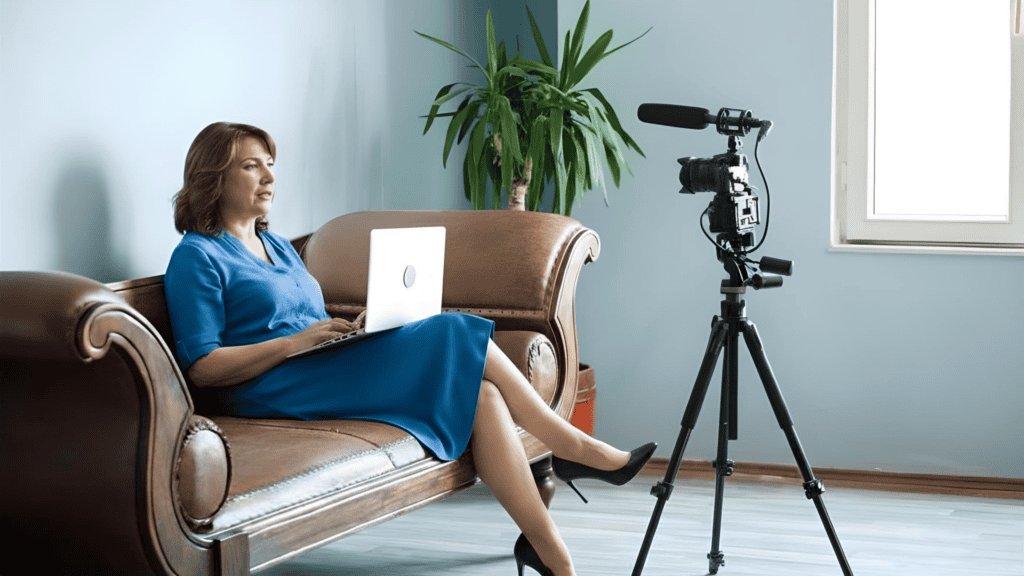
If creating videos feels hard, perhaps you don’t need a different script. Perhaps you just need a different way. At She Momentum, I help women create videos through relaxed conversations rather than performing for a camera.
If this feels like the right fit for you to show up online more naturally, book your free call here.
© All Rights Reserved.